
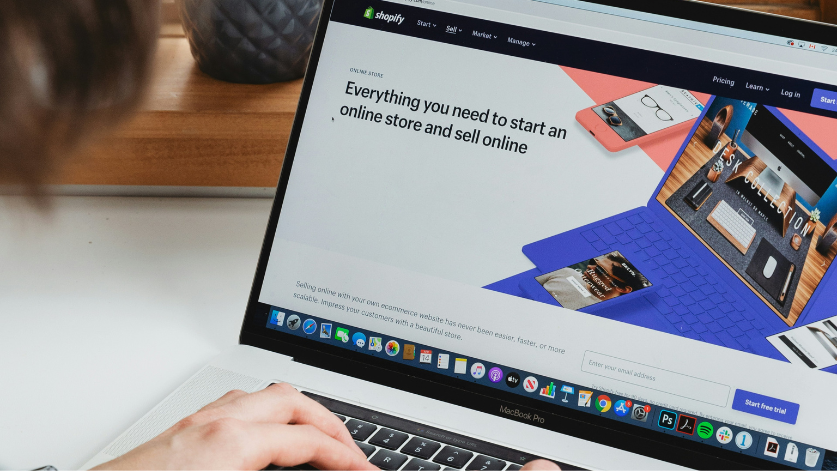
For the past few years, the conversation around B2B on Shopify has followed a familiar pattern. Yes, Shopify can do B2B. Yes, there are features for company profiles, volume pricing, and trade catalogues. But the more capable functionality sat behind Shopify Plus, and the total cost of building a proper trade experience pushed many smaller brands towards custom platforms or held them in legacy setups.
Spring '26 shifts that picture. Shopify is bringing more of its B2B functionality down to lower plans, making basic trade commerce accessible to a broader range of businesses. That is a meaningful development, and it is worth understanding clearly, both what it opens up and where the platform's limits still lie.
What Shopify has shipped for B2B
The most commercially significant update in this edition for B2B brands is straightforward: B2B features are now available across more plans, including company profiles, volume pricing, and up to three B2B catalogues, at no extra cost.
It is Shopify making basic trade functionality standard across the platform, bringing B2B within reach of smaller businesses that could not previously justify the cost of Plus.
Alongside the plan changes, several operational updates land in this edition that matter for brands running trade channels on Shopify.
For B2B businesses where trade customers pay by card, automated vaulted payments remove the need to manually process charges against saved payment methods. Shopify Flow can trigger the charge automatically on fulfilment, invoice due date, or a custom rule. It is a useful operational improvement for the right setup, though it does not address the broader payment on account model that most credit-based trade relationships rely on.
Shopify now syncs B2B data natively with QuickBooks and Mailchimp. B2B orders, purchase order numbers, and company details flow directly into QuickBooks, and Mailchimp can now build B2B-specific customer segments for targeted trade communications.
Two further updates are worth noting, though they are predominantly DTC and omnichannel retail features with some B2B applicability. Discounts by market lets you run different promotions across regions, retail locations, and B2B setups within the same admin, useful if you are running region-specific trade promotions, though most B2B pricing is handled through customer-specific price lists rather than discount rules. Variant-level publishing gives you control over which product variants are available by channel and market without custom development, which has some relevance for restricted trade catalogues, but most B2B catalogue management happens at the company account level rather than here.
What the B2B plan change actually signals
The decision to make B2B features standard across more plans is worth reading carefully. Shopify is broadening its B2B reach, making trade functionality accessible to a wider range of businesses rather than reserving it for Plus subscribers. For brands that have held back from building a proper trade experience because of the cost or complexity of doing it on Plus, that barrier has been lowered.
If your trade operation still relies on phone orders, email confirmations, or manual re-keying, Shopify now has the native tooling to start replacing those processes. Self-serve ordering, automated payments, volume pricing, and company-level account management are all available without significant custom development, provided your back-office systems are straightforward enough to integrate cleanly.
That does not mean every B2B brand should be on Shopify. Complex trade logic, large SKU volumes, branch networks, and deep ERP integrations sometimes need more than Shopify can offer natively. But for brands whose trade complexity is manageable, the Spring '26 updates remove several of the objections that previously put people off.
The honest picture
The progress is real, but some structural limitations remain.
In our experience, credit management is one of the more significant gaps for mid-market B2B on Shopify. In a properly run trade operation, credit decisions are driven by ERP data: live exposure across all orders and invoices, agreed limits, and payment history. Shopify has no native mechanism to query that data at the point of purchase. Workarounds exist using Shopify Flow and metafields, but they are approximations rather than a genuine real-time credit check, and for businesses with complex credit relationships across large trade account networks, they are unlikely to be sufficient.
That brings us to the broader integration challenge. ERP integration is where most mid-to-upper market B2B projects run into difficulty. The prebuilt connectors work well when systems are clean and configured to a standard setup. Most are not. Businesses that have run their ERP for years tend to have customised it significantly: fields repurposed, custom objects added, data structured in ways that made sense at the time but do not map neatly to what an out-of-the-box connector expects. That is not a criticism of Shopify. It is the reality of B2B systems at this scale, and it means integration is almost always a more involved project than it first appears.
Other areas where Shopify still requires significant custom development or third-party solutions include punchout catalogue support for procurement system integration, genuine unit of measure handling for distributors selling in cases or pallets, full self-service invoice management including part payment of individual invoice lines, and key account branded portals with complex user and permission structures.
There is also a broader point about where Shopify's B2B capability is genuinely suited. For businesses with manageable trade account structures, relatively standard pricing logic, and ERPs that are configured cleanly, it is a compelling and increasingly mature option. For manufacturers, distributors, and suppliers with deep ERP dependencies, large buyer networks, procurement-driven purchasing workflows, or highly customised back-office systems, the honest answer is that Shopify will need to be stretched significantly, and in some cases it may not be the right fit at all.
Mark Pickering, Group Operations Director at Velstar, says:
"Shopify has made real progress on B2B and this latest release continues that trajectory. The businesses it works best for tend to be those with straightforward trade account structures, simple product catalogues, and ERPs that are either standard or close enough to integrate cleanly. For those businesses, it is now a genuine option for straightforward trade commerce. Where complexity goes beyond that, particularly around credit management, deep ERP integration, and procurement workflows, platform choice still needs to be carefully scoped. Our job is to make sure clients choose the right platform for their business."
How we can help you get the most from Shopify's Spring 2026 updates
We work with B2B brands across the full eCommerce picture, from building and supporting trade-ready storefronts to the integrations, operations, and ongoing performance work that makes them function properly at scale. That means we understand how these updates connect across your whole operation, not just the build.
If the cost of servicing your trade accounts is higher than it should be, your buyers are expecting a more modern purchasing experience, or your current setup is holding back growth, we can help you work out whether a better solution exists and what it would take to get there. Get in touch with Velstar today.